


Search Here
Table of Contents
|
The appearance of a lobby or waiting area influences visitors' overall experience. Research shows that waiting room experiences directly impact perceptions of overall service quality and satisfaction levels.
Organisations across India increasingly recognise that waiting room chairs serve purposes beyond basic seating, such as reflecting organisational priorities, supporting wellbeing, and affecting visitor experiences during waiting periods.
The design of public waiting spaces fundamentally influences how visitors perceive organisations. From healthcare facilities to corporate lobbies, seating choices send powerful messages about institutional values and visitor care.
Waiting inherently creates vulnerability. Visitors arrive carrying personal stress—whether anticipating medical appointments, important meetings, or service interactions. The physical environment either amplifies or alleviates these tensions. Spatial elements that increase stress include crowded spaces, poor lighting, unpleasant odours, and confusing navigation.
Modern Indian organisations face unique challenges. Visitors often travel long distances through traffic, arrive during peak hours, or wait with family members. The waiting experience becomes part of the overall journey, influencing satisfaction before actual services begin. Thoughtful seating design acknowledges these realities, offering respite and comfort during transitional moments.
Environmental psychology research reveals that natural elements significantly lower anxiety and improve perceived wait times. The effect extends beyond aesthetics—visitors in well-designed waiting areas report higher service quality perceptions, particularly regarding reliability and responsiveness.
Organisations can leverage these insights through strategic seating placement near windows, incorporation of plants, or selection of calming colours. The goal extends beyond functional seating to creating environments that actively support visitor wellbeing. When people feel physically comfortable and emotionally supported, their entire service experience improves.
Public seating serves fundamentally different purposes than workplace chairs, requiring distinct design approaches that balance multiple competing demands.
Unlike office environments where individual users adjust chairs for personal comfort, waiting area chairs must accommodate hundreds of different bodies daily. This constant use demands materials that withstand significant wear while maintaining appearance and structural integrity.
Indian public spaces face additional challenges. Monsoon humidity affects material longevity, dust accumulation requires frequent cleaning, and high foot traffic accelerates wear patterns. Organisations need seating solutions engineered for these realities—chairs that maintain a professional appearance despite intensive use and environmental stressors.
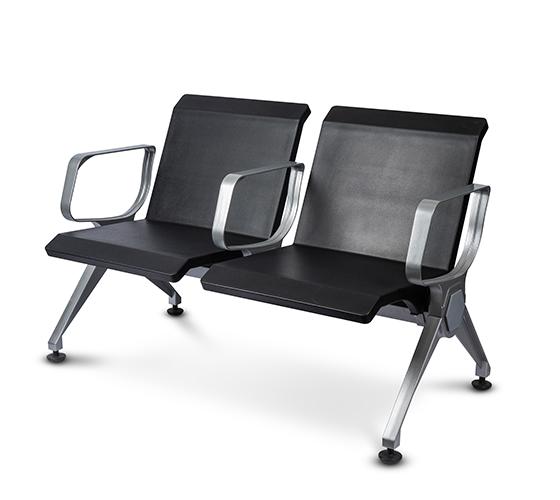
Public spaces serve everyone—elderly visitors requiring arm support, parents managing children, individuals with mobility aids, and people of varying body sizes. BIFMA standards recommend designing for the 5th percentile female to the 95th percentile male, ensuring broad accessibility. The Wipro Flexico Moderno options come certified with ANSI/BIFMA 5.1 standards while being available in 2, 4 and 6 seater configurations. The chairs are rust-proof and shock-resistant, which makes them durable for the Indian environment.
Waiting room chairs must provide intuitive comfort without adjustment mechanisms. Fixed designs that naturally support proper posture become essential, as visitors cannot customise settings during brief waiting periods.
While extended sitting requires complex ergonomic features, waiting area seating focuses on providing appropriate support for shorter durations without overwhelming users with adjustability options.
Effective public seating promotes good posture through design rather than user adjustment. Key considerations include:
|
Design Element |
Purpose |
Impact on Comfort |
|---|---|---|
|
Seat Height |
Accommodates varied leg lengths |
Prevents dangling feet or excessive knee bend |
|
Seat Depth |
Supports without forcing back contact |
Allows comfortable positioning for different body sizes |
|
Back Angle |
Encourages slight recline |
Reduces spinal pressure during waiting |
|
Lumbar Curve |
Provides lower back support |
Maintains natural spine alignment |
These elements work together, creating seating that feels naturally comfortable without requiring instruction or adjustment. Visitors simply sit and experience appropriate support.
The comfort paradox in public seating involves providing sufficient support for extended waits while encouraging appropriate turnover. Excessive comfort might lead to loitering, while inadequate support creates negative experiences.
Research indicates that ergonomic benches providing adequate support during long waiting periods enhance user wellbeing in high-traffic areas. The sweet spot involves seating comfortable enough for typical wait times—usually 20-45 minutes—without encouraging extended occupation. Strategic cushioning density, breathable materials, and appropriate back support achieve this balance.
Material choices profoundly impact both user experience and operational efficiency in public seating applications. Take the Wipro Flexico Comforto chairs, for instance; they come with a ventilated backrest, which makes them perfect for the hot and humid climate in India. Additionally, the customisable options allow users to add armrests, seats, etc.
Hospitals and clinics in India need furniture made from materials that prevent bacterial growth and can handle frequent cleaning with strong disinfectants. This helps maintain hygiene, reduce infection risks, and keep surfaces durable despite constant sanitation. However, clinical functionality must coexist with visitor comfort. Modern material innovations allow:
Antimicrobial fabrics: Inhibit bacterial growth while maintaining a soft texture
Sealed seams: Prevent accumulation of dirt and pathogens
Non-porous surfaces: Enable thorough cleaning without moisture retention
Breathable composites: Reduce heat buildup during extended sitting
These materials keep spaces clean and hygienic without making them look cold or unwelcoming like typical healthcare institutions. Warm colours and thoughtful textures humanise spaces while maintaining cleanliness standards.
Durability testing reveals significant performance variations among seating materials. High-performance options for Indian public spaces include:
High-Density Foam with Protective Covering
Retains shape despite constant use
Protective layers prevent moisture penetration
Comfortable across temperature ranges
Cost-effective for large deployments
Moulded Composites
Extreme durability for outdoor waiting areas
Weather-resistant properties
Easy sanitisation protocols
Recyclable materials support sustainability goals.
Wipro's Metallica Platino Converge Plus series demonstrates how advanced materials like die-cast aluminium armrests and a mild steel central beam create seating that withstands intensive use while maintaining comfort standards expected in modern facilities.
Effective waiting area design extends beyond individual chairs to consider overall spatial arrangements and visitor flow patterns.
Modern organisations require seating designed to optimise space utilisation with flexible layout options. Modular systems allow reconfiguration based on:
Daily traffic patterns: morning rush versus afternoon lulls
Special events: Health camps, registration drives, corporate gatherings
Seasonal variations: Increased visitors during specific periods
Social distancing needs: Post-pandemic spacing requirements
Row seating maximises capacity for high-volume spaces, while clustered arrangements encourage family groups. Mixed configurations—combining benches, individual seats, and accessible options—accommodate diverse visitor needs within single spaces.
Research on autonomy and environmental control links to reduced stress, particularly in healthcare settings. Visitors value:
|
Design Insight: The Personal Space Equation Effective public seating balances density with dignity. While organisations need efficient space utilisation, cramped arrangements increase visitor stress and create negative impressions. The optimal layout provides clear personal boundaries while maintaining conversation possibilities for those arriving together. |
Indian cultural contexts add complexity. Extended families often visit together, requiring seating arrangements that accommodate groups while respecting individual space needs. Successful designs provide variety—intimate clusters for families, individual seats for solo visitors, and clear circulation paths preventing crowding. The Wipro Metallica Platino Lineo series comes in numerous seating configurations ranging from 2 to 4 people. Its solid build quality and ergonomically designed seats are perfect for any setting.
Beyond physical comfort, waiting area chairs contribute to emotional wellbeing through thoughtful integration with environmental elements.
The care environment's effect on psychological wellbeing has become central to modern facility design. Organisations increasingly recognise that waiting experiences shape overall service perceptions. Strategic interventions proven effective include:
Natural Light IntegrationPosition seating to maximise daylight exposure, which research shows affects mood and reduces perceived wait times. Even in interior spaces, light-coloured materials and strategic placement near windows create brighter atmospheres.
Biophilic Design Elements
The use of plants and natural greenery reduces stress in waiting environments. Seating arrangements that incorporate planters or face green walls create calming focal points.
Acoustic Considerations
Sound significantly impacts stress levels. Waiting room chairs with sound-absorbing materials help create quieter environments. Strategic placement away from high-traffic corridors reduces noise exposure. Just like the Wipro Metallica Platino Wave series, which comes equipped with shock-absorbing levellers on every foot, which also help reduce noise.
Colour Psychology
Soft, neutral tones in seating fabrics create calming atmospheres without overwhelming spaces. Light blues, beiges, and gentle greens prove particularly effective in healthcare settings while maintaining professional appearances suitable for corporate environments.
Organizations demonstrating genuine care through environmental design build stronger connections with visitors before primary interactions begin. When people feel valued through thoughtful surroundings, their entire experience improves, creating positive associations that extend beyond single visits.
Selecting appropriate waiting area chairs requires balancing multiple factors while maintaining focus on visitor wellbeing and operational efficiency. Organisations that invest in quality public seating demonstrate commitment to visitor comfort while ensuring long-term value through reduced replacement costs and maintenance requirements.
The journey toward better public spaces begins with understanding that seating serves purposes beyond basic functionality. Explore Wipro's public seating solutions designed specifically for Indian organisations seeking to create welcoming, comfortable waiting environments that reflect their values and support visitor wellbeing.
Waiting area chairs prioritise universal comfort without adjustability, use more durable materials for high traffic, and feature designs that naturally support varied body types for shorter sitting durations.
Research indicates mixed configurations work best—combining row seating for efficiency with clustered arrangements for families and individual seats for privacy-seeking visitors. Natural light exposure further reduces stress.
Modern waiting room chairs use antimicrobial materials in warm colours, sealed construction preventing dirt accumulation, and smooth surfaces enabling easy cleaning while maintaining inviting aesthetics through thoughtful design.
Soft, neutral tones like light blue, beige, and gentle green create calming atmospheres in healthcare settings. Corporate spaces benefit from professional greys and blues maintaining brand alignment.
Quality waiting area chairs with commercial-grade construction typically last 7-10 years with proper maintenance. Factors affecting lifespan include usage intensity, cleaning protocols, and environmental conditions.